
50 years of Humphrey Coliseum with Gaddis Hunt
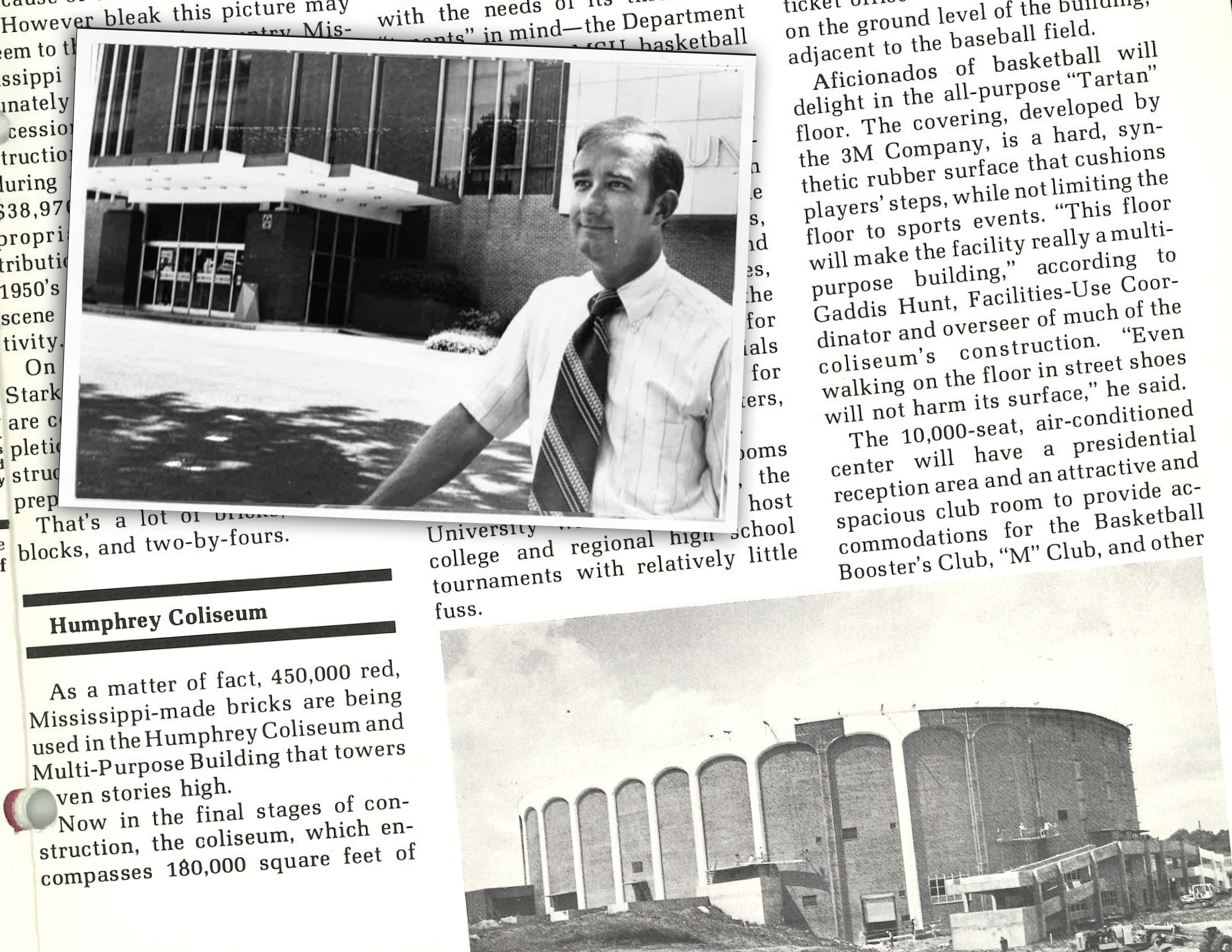
In the 50 years that Humphrey Coliseum has stood on the north end of MSU’s campus, perhaps no one has known more about its inner workings than Gaddis Hunt. Described by John K. Bettersworth as “indefatigable,” Hunt held many roles over his 40-year MSU career, which included managing the MSU student union and Humphrey Coliseum.
To celebrate its 50th anniversary, we spoke with Hunt about what he remembers about the early years of The Hump.
Q: What were some of the inspirations for MSU looking to build a new coliseum?
A: The challenge that we faced was that McCarthy Gym needed to be replaced. With that, the university decided it needed something more than just a gymnasium, so to speak. We wanted a place to host registration, a place to host graduation and so on. We wanted a truly “multi-purpose” building that could host all kinds of events. A group of us made some preliminary trips around the region to get some ideas and thoughts on what we could do. We went to Alabama, Auburn and Clemson. I think we also went to Georgia. That had to have been 56 years ago.
Q: Were you involved in the design & construction process of The Hump? Were there alternate designs?
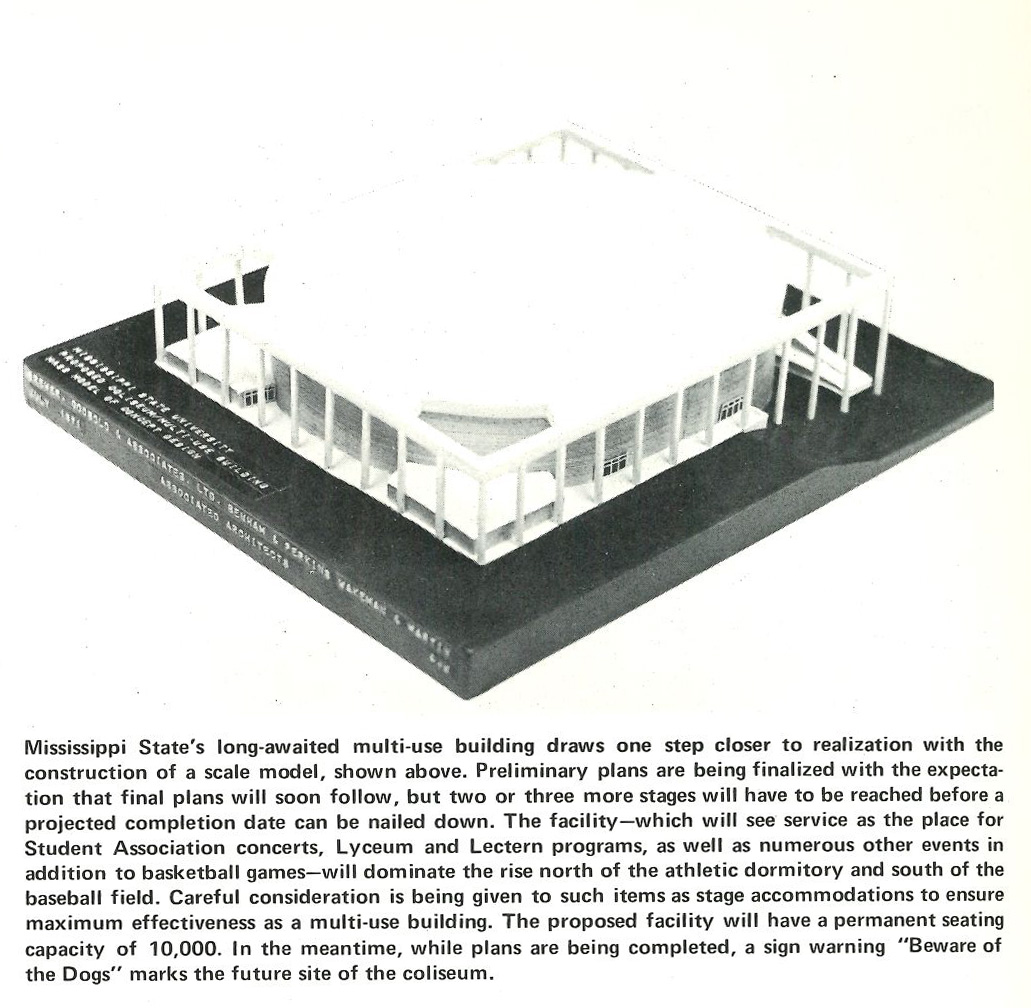
A: The original design for the coliseum was for it to have a roof that extended out as an awning around the building. The reason that the lobbies were so small in each little corner is because the original design was for a flat roof to be extended out so you could have people could assemble outside under that roof and have some protection from the elements.
Also, the columns that you see were to be separated out to support the roof awning and be backlit. So when you came in at night, you would see these grand backlit columns, which was sort of a throwback to the columns in classic Mississippi houses. It was kind of a way to tie in Mississippi with a very modern, structure. While these plans would have been unique, they were eventually scrapped due to costs and their lack of structural value.
Q: What are some memorable concert or event stories you have?
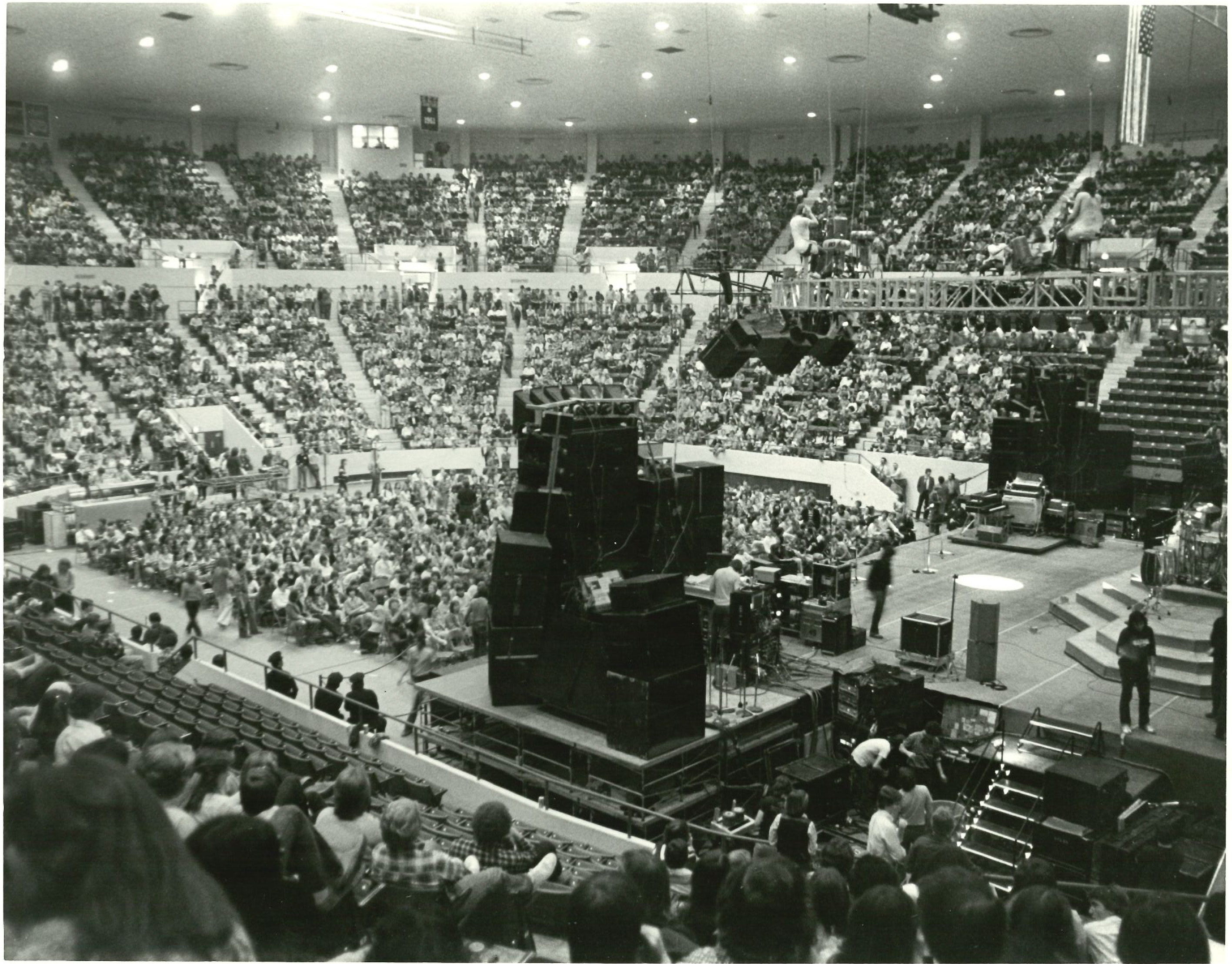
A: Bob Hope was one of the first performances held in the coliseum. Back in those days it was common for spotlights to have two carbon rods that would create an actual flame. As you can imagine that created some smoke. Once the event started, all the sudden I look up and the fire department was coming down the hallway asking where the fire was. It turned out that the smoke from the spotlights had triggered the alarm that went right to the fire station. Thankfully, I don’t believe Bob Hope ever even knew what was going on behind the scenes.
One of the most difficult challenges every year was to disguise the fact that the annual Faculty Awards Banquet was being held on a basketball court. The event was complete with real chandeliers, drapery, and more to set the scene. This was a prime example of fulfilling our mission to have a multi-purpose facility.
Q: What did having a facility like this mean for Starkville and the GTR area?
A: Before the coliseum, the Newell-Grissom Building was our go-to for concerts and events. Personally, I remember both registering for classes and graduating at Newell-Grissom. It hosted some great acts over the year like the Beach Boys, Johnny Mathis and more. However, its small capacity and lack of air conditioning could create some problems. August graduation in there could be pretty tough.
Having the new coliseum provided a space for so much more than just MSU events and concerts. I remember having FFA, 4-H conferences and similar events that benefited restaurants and hotels throughout the whole area. Area schools would also use the coliseum to host graduations.
Q: What’s one thing you’ll always remember about your time in Humphrey Coliseum?
A: One of the best things we did was using student workers. They would help set up for events, operate the spotlights, run sound and plenty of other things. I've got former students that I see all the time that come up and say, “I remember working that show,” which was a nice experience for them because I got to interact with, with performers.
It’s hard to narrow it down to one thing, but I think for me the best thing was that the design of the building was able to support so many different things A lot of buildings do some things well. Like basketball could be presented well, but it doesn't really do justice to other events. We were proud to have a facility at MSU that met our “multi-purpose” mission so well.